This is your moment.
December 8, 2025

At this busy time of year, we can easily shift into autopilot, running from one thing to the next, consumed by our to-do lists with little regard for our own well-being.
If that's your current reality, that's okay. We certainly don't want to make things worse by beating ourselves up.
If you're open to taking a brief pause to give yourself some attention, please read on. Our focus today is practicing real self-care (Key #8 from Resourced & Ready: The Ultimate R&R). And if now isn't the right time, just close this email and know that I'm sending loads of love and care your way.
Key #8: Practice Real Self-Care
You’ve probably heard the airline reminder, “Put on your own oxygen mask before helping others.” And it turns out that this advice isn’t just for emergencies—it’s pretty good guidance for everyday life, too. Taking care of ourselves isn’t just about feeling good; it’s essential to our well-being, our success, and our ability to show up fully for the people and activities that matter most.
Self-care looks different for everyone. It might be yoga, a walk outside, music, painting, talking with a friend, standing up for a cause, reading, or simply getting good sleep (which can feel anything but simple). Sometimes it’s catching up on things we’ve been putting off or doing small tasks that make us feel grounded and accomplished.
Real self-care starts with knowing ourselves. It can take some trial and error to discover what calms us when we’re stressed or restores us when we’re drained.
Thinking back to what you loved as a kid can help, as can noticing how your energy shifts before and after certain activities. These small clues can show us what we really need.
But knowing what helps isn’t enough. We also have to make space for it. Even when our calendar feels impossible, a few intentional moments can make a meaningful difference.
Try It: A Quick, Joyful Reset
The Joy Workout is a simple, science-backed way to reduce stress quickly—no gym, no equipment, and just a few minutes required. It’s especially helpful during the holidays, when our schedule may feel particularly overloaded.
Created by psychologist Kelly McGonigal, this short routine uses rhythmic, playful movement to boost endorphins, motivation, resilience, and emotional regulation. It’s not about perfection or six-pack abs; it’s about moving in ways that feel good.
Reach for Joy (1 min)
Stand tall and raise your arms overhead, then stretch out to the sides. Take deep breaths and feel your chest open.Gentle Sway (1 min)
Shift your weight from side to side, letting your arms move freely. Move with the rhythm of a favorite song.Bounce a Little (1 min)
Lightly bounce on the balls of your feet, swinging your arms gently. Keep it small and playful.Shake it Off (1 min)
Loosen tension by shaking your hands, shoulders, and hips. Move in any direction that feels good.Jump for Joy (1 min)
Add small hops or jumps, pumping your arms lightly. Focus on energy, not form.Celebrate! (1–2 min)
Dance freely, spin, wave your arms, or toss imaginary confetti. Finish with a big smile and a deep breath.
Self-care doesn’t have to be complicated, time-consuming, or expensive. What matters is noticing what we need and giving ourselves permission to take even the smallest step toward that.
Taking care of yourself isn’t selfish. It’s essential. When you build in small moments of care, you protect your energy and enhance your ability to be present for the people and responsibilities that matter most to you.
I hope to be in touch once more before the end of the year. Until then, I wish you warmth, ease, and moments of true joy this holiday season.
Thanks for being here. And thanks so very much for being you!
Elizabeth
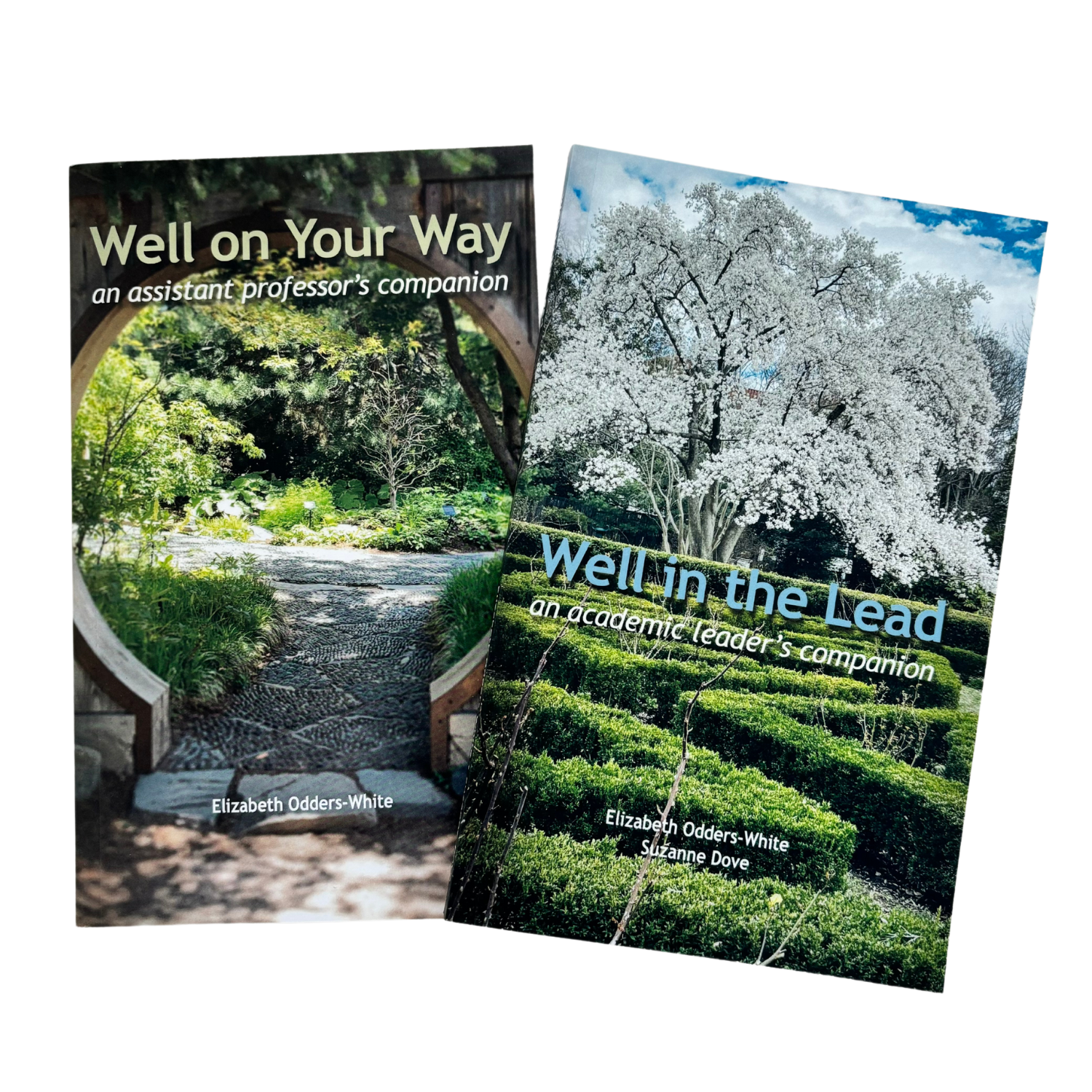
Did you know that I've written two short books to support you as you traverse the sometimes rocky terrain of academic life? Well on Your Way: An Assistant Professor's Companion provides encouragement and wisdom for those on the path toward tenure, and Well in the Lead does the same for academic leaders. I hope you'll check them out!
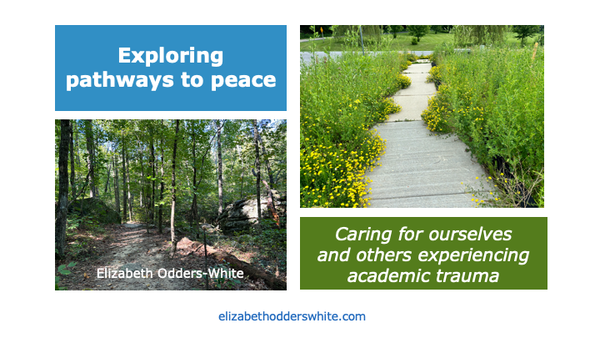
You may know that I’ve spent a lot of time reflecting on how, for some of us, the academic environment is not merely challenging, but traumatizing. Exploring Pathways to Peace is a narrated slideshow that reviews common sources of trauma in academia (Preview: it’s not only catastrophic events), describes some of the symptoms, and offers tools for healing. I hope the presentation provides a path forward, whether you’ve experienced academic trauma yourself or you’re seeking to help others.
Whether you’re feeling empowered and energized or overwhelmed and exhausted, Resourced & Ready: The Ultimate R&R provides keys to finding balance and building resilience. I hope you’ll return to it often as you continue to navigate this uncertain terrain.
To support that process, I’ll be digging into a different key in each of my upcoming newsletters. We’ll explore the core concepts and consider simple ways to put them into practice.